What if the most profound chapter of your journey began not on the water, but within the silent, salt-dusted corridors of a town where time itself has lingered since 1503? It’s natural to feel that modern travel often lacks the depth of true discovery, especially when navigating the bustling hubs that frequently overshadow the quiet majesty of the Malabar Coast. By immersing yourself in the evocative heritage of fort kochi kochi kerala, you’ll find a sanctuary of authenticity that serves as the perfect prelude to a sophisticated river sojourn.
This guide promises to reveal the soul of this ancient port, from the 14th-century Chinese fishing nets that frame the horizon to the hidden spice markets that have captivated explorers for centuries. You’ll learn how to bypass the typical crowds to find intimate cultural encounters, such as private Kathakali performances or curated walks through the Jewish Quarter. We’ll outline a seamless plan to transition from these historical streets to the deck of your luxury vessel; ensuring your movement into the tranquil rhythms of Kerala’s waterways is as graceful as the landscape itself.
Key Takeaways
- Discover how this water-bound enclave serves as a vibrant tapestry where global influences converge to create the unique cultural heart of the Malabar Coast.
- Trace the majestic footsteps of empires, from the arrival of Vasco da Gama to the enduring Dutch architectural legacy that defines the soul of fort kochi kochi kerala.
- Uncover the sensory delights of the region, including the silent silhouettes of iconic Chinese fishing nets and the evocative, narrow alleyways of historic Jew Town.
- Gain expert insight into the optimal season for your 2026 sojourn and learn how to navigate the historic heritage zones with the grace and ease expected by the discerning traveller.
- Learn how to seamlessly integrate your stay in this enchanting town with a bespoke Kochi-Alleppey waterway voyage for a truly transformative Kerala river odyssey.
The Enchanting Tapestry of Fort Kochi: An Introduction to Kerala’s Cultural Heart
Within the historic district of fort kochi kochi kerala, time surrenders its usual urgency to the rhythmic pulse of the Arabian Sea. This water-bound enclave serves as a sanctuary where the air remains thick with the scent of brine and sun-dried spices. It’s a place where the landscape feels less like a modern city and more like a curated collection of memories. As you wander through streets lined with majestic rain trees that have stood for over 200 years, you’ll encounter a vibrant tapestry of global influences. Arab traders, Chinese explorers, and European colonizers have all woven their stories into the crumbling colonial architecture that defines this shoreline. This neighborhood isn’t just a destination; it’s the essential gateway for any bespoke river odyssey through the soul of the Malabar Coast.
The town doesn’t just display its history; it breathes it. You’ll find a sophisticated blend of cultures reflected in every carved doorway and weathered facade. The atmosphere is one of serene elegance, inviting travelers to linger under the shade of massive canopies or watch the sunset silhouettes of ancient fishing nets. It’s a sophisticated prelude to the tranquil rhythms of the water that await those seeking a deeper connection with India’s heritage.
The Geographical Grace of Kochi’s Shoreline
Fort Kochi occupies a unique position at the mouth of the Vembanad Lake, a vast estuary that stretches over 2,033 square kilometers. This geography was dramatically reshaped by the great flood of the Periyar River in 1341 AD, which closed the ancient port of Muziris and birthed the harbor we see today. The interplay between the salt-laden breeze of the sea and the tranquil backwaters created a natural fortress for trade. This strategic location dictated its destiny as a premier spice-trading hub, attracting merchants from across the globe who sought the “black gold” of Kerala’s hills. The constant movement of water here acts as a living protagonist, shaping the culture and the very ground beneath your feet.
A Living Museum of the Arabian Sea
To walk through fort kochi kochi kerala is to embrace the philosophy of slow travel. Unlike the frenetic energy of modern metropolitan centers, this town preserves the quiet dignity of traditional life. You’ll see local fishermen practicing techniques passed down through generations, undisturbed by the passage of centuries. For the discerning historian, the town offers a curated experience where every street corner reveals a layer of the past. From the 16th-century St. Francis Church to the vibrant murals of the Dutch Palace, the heritage is palpable. It remains a majestic sojourn for those who value depth and authenticity, positioning the town as an unrivaled starting point for a journey into the heart of the subcontinent.
Tracing the Footsteps of Empires: A Sojourn Through Colonial History
The air in Fort Kochi carries a weight of centuries, a fragrant blend of sea salt and spice that whispers tales of distant kingdoms. To wander through fort kochi kochi kerala is to embark on a temporal journey where the architecture serves as a living ledger of European ambition. The Portuguese laid the first stones in 1503, establishing Fort Emmanuel as the inaugural European settlement on Indian soil. By 1663, the Dutch had claimed this coastal jewel, leaving behind gabled houses and a refined sense of order that persists in the quiet lanes today. The British arrived in 1795, weaving their administrative precision and social clubs into the town’s social fabric. This layered legacy creates a “boutique heritage,” a curated atmosphere where every cobblestone reflects a sophisticated confluence of global cultures found nowhere else in the subcontinent.
- 1503: The Portuguese establish Fort Emmanuel, marking the birth of European India.
- 1663: Dutch forces capture the town, introducing distinct architectural motifs and garden layouts.
- 1795: The British transition begins, refining the commercial and social structures of the port.
The town’s evolution wasn’t merely a series of conquests but a slow distillation of styles. You see it in the high ceilings of the colonial bungalows and the sturdy teak beams that have weathered five centuries of monsoons. For those seeking to witness these historical shores from the serene vantage of the water, a curated voyage from Kochi to Alleppey offers an unrivaled perspective on the Malabar’s enduring grace.
St. Francis Church and the Vasco da Gama Connection
As the oldest European church in India, St. Francis Church stands as a silent witness to the spiritual and political shifts of the region. Built in 1503 by Portuguese friars, it’s a place of historical pilgrimage, most notably as the original burial site of Vasco da Gama in 1524. The structure presents a fascinating architectural blend, featuring a gabled timber roof and a facade that reflects the transition from Portuguese austerity to Dutch refinement over the centuries.
The Dutch Palace and the Murals of Mattancherry
The Mattancherry Palace, despite its name, was a gift from the Portuguese to the Raja of Kochi in 1555. It’s a majestic example of how colonial influence harmonized with local royalty. Within its walls, the Hindu murals are the true treasure, covering over 300 square feet with vibrant, epic scenes from the Ramayana. These paintings represent some of the finest examples of Kerala’s mural art, showcasing a sophisticated level of detail and color that has survived the humid embrace of the coast for generations.
The enduring allure of fort kochi kochi kerala lies in this ability to hold multiple histories at once. It’s a place where the tranquil rhythms of the backwaters meet the ghosts of empires, inviting the discerning traveler to linger and listen to the stories etched into its very foundations.
The Vibrant Rhythms of Local Life: Iconic Sights and Sensory Delights
The soul of fort kochi kochi kerala resides in its unique ability to suspend time, inviting travelers to step into a living museum where ancient traditions breathe through the modern coastal air. This enclave is a sensory masterpiece. It offers a curated blend of colonial architecture and indigenous spirit that defines the Malabar Coast. As you explore the winding paths of fort kochi kochi kerala, the history of the global spice trade becomes tangible through the scents and sights that have remained unchanged for centuries.
The Legacy of the Chinese Fishing Nets
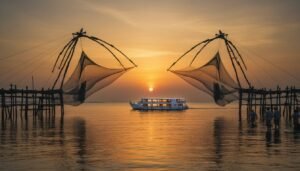
The shore-operated lift nets, locally known as Cheena Vala, represent a marvel of 14th-century mechanical ingenuity. Introduced by traders from the court of Kublai Khan, these structures rely on a sophisticated system of teak wood, bamboo poles, and stone counterweights. Watching the fishermen work is a lesson in rhythmic unison. They operate the nets with a grace that mirrors the gentle swell of the Arabian Sea. For the most majestic views, find a vantage point near Vasco da Gama Square around 5:45 PM. The nets create hauntingly beautiful silhouettes against the deepening orange of the sunset, a scene that has captivated visitors for over 600 years.
Jew Town and the Paradesi Synagogue
Walking through the evocative alleyways of Jew Town feels like a journey through the layers of Kerala’s pluralistic history. This narrow district was once the heart of a thriving Jewish community that found sanctuary here centuries ago. The Paradesi Synagogue, established in 1568, stands as a testament to this enduring legacy. Inside, the floor is adorned with 1,100 hand-painted porcelain tiles, each uniquely crafted and imported from Canton in 1762. Belgian glass chandeliers cast a soft glow over the ancient scrolls, creating an atmosphere of profound reverence. The surrounding antique shops offer treasures from the 19th century, while the air remains thick with the fragrant scent of cardamom, ginger, and black pepper from nearby warehouses.
Kathakali: The Transformative Power of Water and Myth
An evening at the Kerala Kathakali Centre is an essential part of any Kochi to Alleppey sojourn. This 17th-century classical dance drama is more than a performance; it’s a spiritual transformation. Guests are encouraged to arrive early to witness the elaborate makeup ritual, a process that often requires 3 hours of meticulous application. Using natural pigments, the artists transform into deities and demons of Hindu mythology. The storytelling relies on 24 fundamental mudras, or hand gestures, and extraordinary facial expressions that convey deep emotional truths. It’s an enchanting experience that connects the modern traveler to the ancient myths that still shape the cultural landscape of India.
Curating Your Visit: Practical Wisdom for the Discerning Traveller in 2026
Approaching the historic enclave of fort kochi kochi kerala in 2026 requires more than a simple itinerary; it demands a mindset tuned to the slow, melodic frequencies of the Malabar Coast. This isn’t a destination for the hurried tourist. It’s a sanctuary for the traveller who finds joy in the patina of a colonial wall or the precise movement of a fisherman’s net. To engage with this landscape is to participate in a living history that has been refined over six centuries of global trade and cultural synthesis.
The Best Time to Wander: Weather and Seasons
The 2026 travel calendar suggests that the winter months, specifically from October through March, remain the most temperate window for exploration. During this period, daytime temperatures typically hover between 23°C and 31°C, providing a comfortable climate for long afternoon walks through the spice markets. If you seek a more introspective experience, the monsoon season from June to August offers a lush, evocative beauty where the rain transforms the greenery into a vibrant, neon tapestry. For a comprehensive look at the atmospheric shifts, you may consult this guide on weather in cochin to plan your arrival with precision.
Navigating the Heritage Zone
Entering the fort area is best achieved by water. The traditional public ferries departing from Ernakulam provide an authentic, salt-sprayed introduction to the coastline for a nominal fee. Once you’ve arrived, the most rewarding way to experience the colonial architecture is through curated walking tours. These strolls allow you to pause at the appositives of history, such as the 1503-built St. Francis Church or the Dutch Cemetery. For those who prefer five-star comfort, professional private transfers can be arranged to navigate the narrow lanes with grace, ensuring you reach your destination without breaking the tranquil rhythms of your day.
Selecting accommodation is a critical component of the experience. We recommend choosing heritage properties that mirror the town’s storied past, such as restored merchants’ houses or former colonial residences that have been transformed into boutique hotels. These spaces offer a high-register level of service while preserving the original teak beams and terracotta tiles. Local etiquette is equally important. Respect the quietude of the residential quarters and engage with locals with a gentle, patient curiosity. The social interaction here is a graceful exchange; it’s a reflection of a community that has hosted the world for generations with unrivaled hospitality.
From Cobbled Streets to Tranquil Waters: Integrating Fort Kochi into Your Kerala Odyssey
A sojourn through the historic quarters of fort kochi kochi kerala provides a necessary cultural grounding before one surrenders to the liquid rhythms of the backwaters. This ancient port, with its layers of colonial history and spice-scented air, prepares the traveler for the deeper silence found on the river. It’s a place where time slows down, allowing the senses to sharpen as you walk past centuries-old warehouses and vibrant street art. By spending a few days immersed in the heritage of the town, the transition to the water becomes a natural progression of your Kerala story, moving from the tangible echoes of the past to the timeless flow of the present.
The Seamless Transition to a Luxury Houseboat
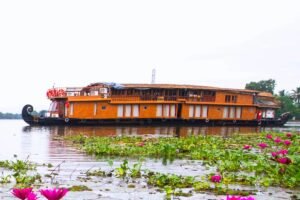
The shift from the basalt-paved alleys of the town to the emerald expanse of the Kochi-Alleppey waterway is a choreographed movement of grace. India Cruise ensures this transition feels like a continuation of the same elegant narrative rather than a jarring change of pace. Guests move from heritage boutiques to the water’s edge, where a refined selection of vessels awaits to carry them into the heart of the wetlands. This journey represents the pinnacle of slow travel, where the landscape evolves from the architectural grandeur of the coast to the rustic, swaying palms of the interior. The 1.5-hour drive to the embarkation point serves as a meditative bridge, allowing the vibrant energy of the city to fade into the background as the tranquil horizons of the Vembanad Lake begin to appear.
Bespoke Tours and Professional Transfers
A truly sophisticated journey requires an expert hand to manage the nuances of travel, ensuring that the spirit of fort kochi kochi kerala is fully realized before you set sail. India Cruise acts as a premier storyteller and concierge, bridging the gap between land-based exploration and your private houseboat Kerala adventure. Our professional transfers are private passages that ensure your comfort remains uninterrupted from the hotel lobby to the houseboat deck. By engaging with our expert-guided tours, you’ll unlock hidden gems that many visitors overlook:
- Secret Courtyards: Discover private gardens tucked behind 16th-century Portuguese facades.
- Spice Exchanges: Witness the traditional grading of ginger and cardamom in warehouses that have operated since the British Raj.
- Artisan Encounters: Meet local craftsmen who maintain the delicate balance of Kerala’s traditional arts.
This holistic approach views the entire trip as a single, unfolding narrative of discovery. Every logistical step is handled with quiet confidence, allowing you to linger over a final sunset by the Chinese fishing nets without worrying about the journey ahead. We guarantee that your transition from the historic port to the majestic river is as fluid and enchanting as the waters themselves.
Charting Your Course Toward the Malabar Horizon
The timeless allure of fort kochi kochi kerala transcends the mere passage of centuries; it’s a living archive where the 1503 foundation of St. Francis Church meets the 14th-century silhouette of Chinese fishing nets. You’ve journeyed through the intricate layers of colonial history and felt the vibrant sensory rhythms that define this coastal sanctuary. As you look toward your 2026 travels, the transition from the sun-drenched cobbled streets to the tranquil, palm-fringed waterways offers a profound connection to the heart of the Malabar Coast. Our team at Cruise in India, a proud member of the Authentic India Tours family, brings specialized expertise to the Indian cruise market to ensure your exploration is both deep and exceptionally refined. We invite you to step beyond the shore and experience the liquid history of the region through our curated luxury itineraries. Explore our bespoke Kerala river odysseys and begin your journey through the soul of India. The whispers of the backwaters are waiting to tell you their oldest stories, and the horizon is yours to claim.
Frequently Asked Questions
Is Fort Kochi worth visiting for a luxury traveller?
Fort Kochi is an essential destination for the luxury traveler seeking a refined sojourn into India’s colonial past. This enclave hosts 12 boutique heritage properties that blend 16th-century Portuguese architecture with modern elegance. Travelers can indulge in curated culinary experiences at Malabar Junction or enjoy private viewings of 14th-century spice warehouses. It’s a place where the tranquil rhythms of the coast meet unrivaled hospitality.
How many days should I spend in Fort Kochi before my cruise?
We recommend a 48 to 72-hour stay to fully embrace the evocative atmosphere of fort kochi kochi kerala before your river odyssey begins. This duration allows 1 full day for exploring the Mattancherry Palace and the 1568-established Paradesi Synagogue. A secondary day ensures a leisurely pace for wandering through art galleries or enjoying a sunset over the Arabian Sea. It serves as the perfect prelude to a bespoke river cruise.
What is the best way to get to Fort Kochi from Kochi airport?
A private chauffeured car remains the most sophisticated way to navigate the 45-kilometer journey from Cochin International Airport to the heart of the heritage zone. The drive typically spans 75 to 90 minutes depending on the time of day. For those seeking an arrival with a sense of place, we suggest booking a pre-arranged transfer through our concierge services at cruiseinindia.com to ensure a seamless transition to your luxury accommodation.
Can I see the Chinese fishing nets in action at any time of day?
You’ll find the majestic Chinese fishing nets most active during the golden hours of sunrise and sunset when the tide is optimal for the 4-man teams to operate the cantilevered structures. These 10-meter-high timber frames have graced the shoreline since the 14th century. While some nets remain lowered throughout the day for demonstration, the authentic rhythmic harvest occurs between 6:00 AM and 9:00 AM or after 5:00 PM.
Are there specific dress codes for visiting the Paradesi Synagogue or St. Francis Church?
Modest attire that covers shoulders and knees is mandatory for all visitors entering the Paradesi Synagogue and St. Francis Church. Visitors at the synagogue must remove their footwear before stepping onto the 18th-century hand-painted willow-pattern tiles from Canton. These sacred sites maintain strict protocols to honor their 500-year history. Carrying a lightweight linen scarf is a practical way to ensure you’re always prepared for these cultural encounters.
What should I pack for a stay in Fort Kochi followed by a river cruise?
Your suitcase should prioritize 100% breathable linens and light cottons to suit the 30-degree Celsius tropical climate of the Malabar Coast. Pack 1 pair of sturdy walking shoes for heritage tours and a set of smart-casual attire for dinner on the cruise deck. Don’t forget a high-quality SPF 50+ sunscreen and a wide-brimmed hat to protect against the equatorial sun. A versatile wardrobe ensures you transition gracefully from dusty spice markets to elegant evening sojourns.
Is it possible to arrange a private Kathakali performance?
We can certainly arrange a private 90-minute Kathakali performance within the intimate courtyard of a restored heritage villa. This curated experience allows you to witness the 2-hour transformation as artists apply intricate mineral paints before the storytelling begins. It’s an unrivaled opportunity to engage with a 17th-century art form in a personal setting. You can secure these bespoke arrangements via our travel experts at cruiseinindia.com for a truly soul-stirring evening.
How far is Fort Kochi from the Alleppey houseboat boarding point?
Fort Kochi is situated approximately 55 kilometers from the primary houseboat boarding points at Punnamada Jetty in Alleppey. The journey by private vehicle takes between 100 and 120 minutes along the coastal highway. This proximity makes fort kochi kochi kerala an ideal starting point for travelers moving from the historical urban landscape to the tranquil rhythms of the Kerala backwaters. Plan for a mid-morning departure to reach your vessel by the 12:00 PM boarding time.