Could a simple excavation of red earth serve as the profound intersection where the geography of the human body meets the timeless spirit of the landscape? While many visitors are drawn to the emerald allure of the backwaters, they often find that standard descriptions of local traditions lack the spiritual resonance that truly defines this ancient region. You’ve likely felt that there’s a deeper story waiting behind the vibrant performances, a connection to holistic wellness that transcends mere physical exercise. Within the hallowed confines of the Kalari, the traditional training arena of Kalaripayattu Kerala’s ancient martial art, this hidden depth reveals itself through every ritualized movement and architectural detail.
In this exploration, you’ll uncover the architectural wonder and spiritual depth of the Kalari, gaining an appreciation for its sacred symbolism and the disciplined stages of a practitioner’s journey from body control to bare-handed combat. We’ll trace the path of the warrior through the Northern and Southern styles, ultimately connecting these ancient practices to the broader, serene landscape of a luxury river cruise. This journey promises to transform your understanding of Kerala’s heritage, offering a soulful perspective that lingers long after your vessel has drifted past the palm-fringed shores.
Key Takeaways
- Discover how the subterranean architecture of the Kuzhikalari creates a sacred microclimate that tempers the body and spirit of the practitioner through ancient design principles.
- Explore the rigorous progression of mastery within the Kalari – the traditional training arena of Kalaripayattu Kerala’s ancient martial art, where students evolve from serpent-like flexibility to weapon proficiency.
- Gain insight into the mysterious Marma traditions, where the knowledge of 107 vital points serves as both a lethal combat skill and a sophisticated system of orthopedic healing.
- Visualize how a curated backwater cruise serves as a sophisticated gateway to these ancient traditions, offering exclusive access to authentic arenas where the scent of incense and earth lingers in the air.
Table of Contents
The Architecture of the Soul: Understanding the Traditional Kalari Arena
To enter the Kuzhikalari is to descend into a realm where the physical world recedes, replaced by a profound stillness that has endured for centuries. This traditional training arena is precisely excavated into the nutrient-rich red earth of Kerala, a deliberate architectural choice that ensures a consistent, cool temperature for practitioners even as the tropical sun blazes above. Within this hallowed space, Kalaripayattu is preserved through a design that treats the building itself as a living, breathing extension of the martial spirit. The Kalari – the traditional training arena of Kalaripayattu Kerala’s ancient martial art, serves as a subterranean sanctuary designed to shield the warrior from the tropical humidity while fostering intense focus.
The orientation of the arena is never accidental; every entrance faces the east to welcome the first rays of the morning sun. These golden beams are viewed as a source of vital energy, or prana, which invigorates the student before the day’s discipline begins. In the southwest corner stands the spiritual heart of the enclosure: the Poothara. This seven-tiered platform houses the guardian deity, acting as a focal point for the reverence and humility required of every warrior who steps onto the floor. It’s a space where the scent of incense mingles with the damp earth, creating an atmosphere that demands total presence of mind.
The Geometry of the Sacred Space
The dimensions of the arena follow a ritualistic geometry where every measurement corresponds to the mathematical harmony of the human form. Measuring forty-two feet by twenty-one feet, the space mirrors the balance between strength and agility. The floor is a masterpiece of engineering, composed of earth treated with medicinal oils and herbs. This unique preparation creates a resilient surface that absorbs the rhythmic cadence of combat. For those embarking on a Kerala cruise, visiting such a sanctuary offers a rare glimpse into the architectural ingenuity that supports India’s oldest martial legacy.
The Sacred Progression: The Four Stages of Kalaripayattu Mastery
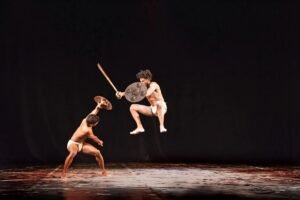
The journey toward mastery within the Kalari – the traditional training arena of Kalaripayattu Kerala’s ancient martial art, unfolds as a sophisticated sequence of transformative stages, each designed to refine the spirit as much as the physique. This odyssey begins with Meithari, a rigorous sequence of body control exercises that serve as the fundamental lexicon of the art, where the practitioner aspires to achieve the sinuous flexibility of a serpent to ensure the body becomes a perfectly tuned instrument of intent. Once this physical foundation is solidified, the student advances to Kolthari, where wooden staves are introduced to teach the extension of awareness beyond one’s physical fingertips, effectively turning the wooden weapon into a seamless limb of the warrior.
As the discipline deepens, the student enters the realm of Ankathari, which represents the true pinnacle of weapon mastery through the use of lethal metal blades and the iconic Urumi, a flexible curved sword that demands absolute precision and courage. Finally, the circle of learning returns to its source with Verumkai, the ultimate phase focusing on unarmed combat and the mastery of vital pressure points. It’s a profound testament to the heritage of Kerala’s ancient martial art, where the body itself becomes the final and most potent shield, capable of both defense and precision strikes without the need for external steel.
The Guru-Shishya Parampara
At the heart of this ancient lineage is the Guru-Shishya Parampara, a reverent relationship between the master, or Gurukkal, and the student that has been preserved through centuries of oral tradition. This bond is forged in the very first moment of entry into the arena, as every student performs a sacred ritual by touching the earthen floor and then their brow as a sign of absolute humility. This gesture acknowledges that they’re entering a sanctuary of wisdom rather than just a training ground. To witness such devotion firsthand while on an Alleppey to Kochi cruise offers a rare, intimate connection to the living pulse of Kerala’s cultural soul, where the echoes of ancient warriors still resonate in the humid air.
A Holistic Lineage: The Healing Arts and Marma Traditions of the Arena
The discipline practiced within the Kalari – the traditional training arena of Kalaripayattu Kerala’s ancient martial art, extends far beyond the strike of a blade or the parry of a staff. It’s inextricably linked to Kalari Chikitsa, a sophisticated system of orthopedic and neurological healing that treats the body as a sacred vessel of energy. Gurukkals are more than just combat instructors; they are masters of the 107 Marma points, those vulnerable junctions of the body where the physical meets the spiritual. This profound knowledge allows a master to either disable an opponent with a single touch or heal an ailment through precise stimulation. The warrior-healer embodies the dual nature of protection and preservation.
To prepare the body for such rigorous demands, traditional oil massages known as Uzhichil are employed with meticulous care. These sessions use medicated oils to increase the practitioner’s suppleness and ensure the unhindered circulation of vital energy throughout the limbs. It’s a sensory experience where the scent of medicinal herbs fills the air, grounding the student in the ancient rhythms of the land while the earth beneath remains cool and steady.
The Intersection of Combat and Ayurveda
The use of herbal pastes and medicated oils within the Kalari reflects the lush biodiversity of the Kerala landscape, where nature provides the very ingredients for both strength and recovery. This intersection with Ayurvedic principles ensures that Kerala’s ancient martial art remains a holistic pursuit rather than a purely combative one. By understanding the Marma points, a practitioner learns to neutralize threats with minimal force, prioritizing the balance of energy over brute strength. This philosophy of restraint is a hallmark of the true master, who views combat as a final resort in the defense of life.
For those seeking to witness this delicate balance between power and restoration, our Kerala backwater cruises offer an elegant journey into the heart of these traditions, where the gentle movement of the water mirrors the internal flow of a master’s energy.
The Cultural Odyssey: Encountering Living History on a River Cruise
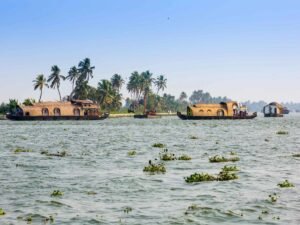
The steady, peaceful movement of a vessel along the palm-fringed waterways provides the perfect prelude to encountering the region’s living history. Witnessing a Kalaripayattu performance is more than a mere excursion; it’s a cornerstone of a sophisticated journey through the southern waterways, where the rhythmic clash of steel resonates against the silence of the palms. A private visit to an authentic Kalari – the traditional training arena of Kalaripayattu Kerala’s ancient martial art, offers travelers a rare glimpse into a world where time seems to stand still amidst the scent of incense and damp earth. These encounters are seamlessly woven into our unhurried itineraries, ensuring that the transition from the water to the warrior’s sanctuary feels like a natural extension of the landscape. For those seeking the ultimate immersion, our luxury houseboats in India serve as the perfect vantage point for this cultural discovery, blending high-end comfort with profound historical insight.
Bespoke Cultural Excursions
Imagine the atmospheric experience of watching a dawn training session, where the mist rises from the nearby backwaters to meet the heat of the red earth. This quiet hour reveals the true heart of the discipline, as students move through their forms with a grace that mirrors the gentle flow of the river. Our Kerala boat house cruises provide the gateway to these ancient sanctuaries, allowing you to step from the deck into a realm of discipline and grace. We position every Kalari visit as a moment of profound discovery within a grander India travel planner framework, ensuring your journey is both adventurous and refined. It’s an invitation to linger on the details of local life, where the ancient echoes of the arena find a harmonious home along the water’s edge.
Step Into the Living Pulse of Kerala’s Heritage
The journey through this sacred arena reveals that true mastery is a symphony of physical agility, spiritual reverence, and holistic healing. From the subterranean depths of the Kuzhikalari to the intricate knowledge of the 107 Marma points, this tradition offers a profound connection to the soul of the landscape. By understanding the Kalari – the traditional training arena of Kalaripayattu Kerala’s ancient martial art, you move beyond the role of a spectator and become a witness to a lineage that has survived centuries of change.
Our unhurried itineraries ensure that these encounters are more than just stops on a map. They’re moments of deep discovery designed to linger in your memory long after you’ve returned to the deck. We invite you to explore our bespoke Kerala cruises and witness the majesty of Kalaripayattu firsthand, where luxury river vessels meet intimate local insights endorsed by official tourism heritage standards. Let the gentle movement of the water lead you toward these ancient sanctuaries, where the warrior’s spirit and the river’s grace flow as one.
Frequently Asked Questions
What is the primary purpose of a Kalari arena?
The Kalari – the traditional training arena of Kalaripayattu Kerala’s ancient martial art, serves as a hallowed sanctuary where physical discipline, spiritual devotion, and medicinal expertise converge into a single, cohesive practice. Beyond its role as a training ground, it functions as a subterranean temple where practitioners honor guardian deities while honing the precision of their movements. It’s designed to maintain a specific microclimate that facilitates the intense focus required for mastery.
Is Kalaripayattu considered the oldest martial art in the world?
Historians and cultural experts widely recognize Kalaripayattu as the world’s oldest surviving martial art, with roots tracing back over three millennia to ancient Kerala. Its influence is believed to have traveled across borders, providing the foundational principles for several Eastern combat disciplines. This ancient lineage is meticulously preserved within the sacred walls of the Kalari, where the original techniques remain largely unchanged by the passage of time.
Can tourists participate in Kalari training during a cruise?
While the full mastery of this discipline requires years of dedicated study under a Gurukkal, travelers on our Kerala cruises can often engage in introductory workshops or meditative observation sessions. These curated experiences allow guests to learn basic postures or witness the rhythmic cadence of a dawn training session. It’s a rare opportunity to connect with the martial soul of the region in a way that respects the sanctity of the tradition.
What should I expect during a traditional Kalaripayattu performance?
You should expect a sensory-rich display of agility that begins with ritualistic salutations to the Poothara and the master. The performance typically escalates from bare-handed body control exercises to high-velocity combat with wooden staves and lethal metal weapons like the flexible Urumi. The atmosphere is often charged with the scent of incense and the sparks of clashing steel, offering a visceral glimpse into the warrior heritage of the southern waterways.
How does Kalaripayattu relate to modern wellness and yoga?
Kalaripayattu shares a deep, symbiotic relationship with yoga and Ayurveda, emphasizing the flow of vital energy and the alignment of the human form. Many of the martial postures, or Vadivus, mirror yogic asanas, focusing on breath control and core stability to achieve a state of holistic wellness. The tradition’s focus on Marma points further bridges the gap between combat and therapy, positioning it as a comprehensive system for physical and mental restoration.